February 29, 2008

I Miss You Every Day


Taback, Simms. I Miss You Every Day. New York: Viking, 2007.

When the sun is shining bright / or when it's wet and gray / I think about you all the time / I miss you every day.

From the creator of the Caldecott-winning Joseph had a Little Overcoat, comes a story for anyone who has ever missed someone so much that they dreamed of making themselves into a human pretzel and stowing away in a friend’s suitcase. In this case, our protagonist decides to mails herself from New York to California to join a friend who has moved away:

I’m going to jump inside a nice big box / I don’t care what you say / I’ll write your address on the front / I miss you every day.

The simple rhyming sequences, most of which end with the haunting repetition of “I miss you every day,” create a playful sing-song veneer while leaving room for the reader/listener to fill the book with as much emotion as they want. The story doesn't attempt either to force an intensity of emotion or to avoid it, but works with a light touch and delivers a satisfying ending that reunites and reassures.

Taback’s visual style combines the emotional honesty of the kid-art aesthetic with the masterful design of an award-winning children’s illustrator. The pictures are bold, stylized, colourful and rich with detail (including a lot of environmental print in the form of everything from signs to candy wrappers to postcards to famous picture book covers). Street signs, addresses, and cityscapes give the book a grounded sense of place from which to explore distance and separation - in this case the story arcs from New York to California - but rather than narrowing the audience, this specificity of place serves to make the distance seem more tangible in a way that strengthens a feeling of universal appeal.

This book speaks well to the experience of separation, as distinct from the experience of loss. It might not be the best book to comfort a child for whom a possible reunion is not in the picture, but the emotional content will still resonate for many. If it came in a thin postcard-sized gift version, I can think of several friends who would mail it to their out-of-town sweethearts.

Warning: If you are missing someone very much, don't try reading this book out loud at storytime. I Miss You Every Day is one of those deceptively simple books that just might undo you at exactly the wrong time. For this same reason, it will also be a powerful tool for echoing and affirming the very strong emotions kids carry with them.

February 28, 2008

Naming the Baby: The Best of the Claremont Review


I haven't even seen the book yet and I'm excited about it! This anthology features the best of young adult (13-19) writing published in the Clarement Review over the past 16 years. Check the CM Magazine review for a more complete description. A fabulous resource for inspiring young writers with the work of other people their age.

If you don't know The Claremont Review, do yourself a favour and check it out. This long-running literary journal is published in Victoria, BC, but features the writing of teenagers from anywhere in the English speaking world. A fabulous place for students to submit their work and possibly even get their first taste of the thrill of publication. The journal is excellent, with some of Canada's finest writers serving as editors, so I can only assume that the quality of this collection will be fantastic. I look forward to reading this book soon.

February 24, 2008

Shi-shi-etko


Campbell, Nicola. Shi-shi-etko. Illus. Kim LaFave. Toronto: Groundwood Books, 2005.

"One, two, three, four mornings left until I go to school." So begins the story of Shi-shi-etko, a young aboriginal girl who is soon to be taken from her family and sent to a residential school. In her last four days with her family, Shi-shi-etko gathers together memories of her home to hold with her until she can return the following summer.

This gentle but profoundly moving story introduces one of the most abhorrent chapters of Canadian history - the story of the forceful and legally sanctified removal of aboriginal children from their families and communities. At the Serendipity conference yesterday, it was fascinating to hear Nicola Campbell speak about trying to find a balance that would allow her to honour the harsh realities of this part of our history and share it with children without simply traumatizing them. It can't have been an easy task, but somehow she has managed to write this book with equal respect for the hearts of the children who will hear this story and the realities of the children who lived this story.

In the way that intense sadness can charge the everyday things around us with incredible sharpness and beauty, the weight of what is about to be lost fills this story with a sense of beauty and connection and quiet focused attention that only makes the impending departure more heartbreaking. The illustrations by Kim LaFave are digitally created, some borrowing from photographs taken by the author, but they have a rich painterly feel that matches Campbell's story. Like the text, the illustrations illuminate the beauty of each plant, place and person that is a part of the coming loss. The images manage to convey joy, wonder and a sense of belonging at the same time as they hold great grief.

Shi-shi-etko is not a textbook that will explain the details or legacy of residential school system to children; instead it is a beautifully told and very human story that offers readers a connected point of entry into a much larger story.

We also got a sneak preview of Nicola's next book, Shinchi's Canoe, which tells the story of Shi-shi-etko's younger brother Shinchi, and takes place primarly at the residential school itself. Another beautifully told story, due out this July.

Serendipity Children's Lit Conference


"Our people will sleep for a hundred years and when they awaken it will be the artists that give them back their spirit."
- Louis Riel

As a person with a profound belief in the power of story, I love the way these words shine a light on the importance of art and story as acts of creation, survival, healing, connection and delight. And what better place to hear them than smack in the middle of a day dedicated to sharing and honouring Canadian Aboriginal children's literature.

Serendipity
is an annual conference organized by the Vancouver Children's Literature Roundtable's in celebration of children's literature. And it was worth leaving my house at an ungodly hour last Saturday morning to join a few hundred librarians, writers, teachers, students and lovers of children's literature who gathered in the UBC First Nations Longhouse to hear about the stories behind some of the most beautifully crafted, thoughtful, and moving children's books coming out in Canada today.

Usually I am not much of a fan of all the introductory speechifying at conferences, but after an introduction to the Longhouse by Richard Vedan, a welcome speech by Steven Point that defied the stuffiness of his Lieutenant Governor title, and several heartfelt welcomes, I could feel a palpable difference in the room. We were all ready to get down to story. And what stories there were. We laughed; we cried; we watched a rogue squirrel face off with the leftover bannock and salmon sandwiches. All in all, it was a pretty fine day.

I met some new (stunning!) books, and got to hear the stories behind ones I knew. But, more than anything, I felt incredibly lucky to be entering a profession where story is recognized as a sustaining force in the world. From speakers to casual conversations, so much about the day reaffirmed for me that I was in the right place as a children's librarian. This is professional development? Shhh.... don't tell anyone what a wonderful time we had.

The rockstars of the day were:


Nicola Campbell
: Author of Shi-shi-etko and the forthcoming Shinchi's Canoe (two picture books that tell the story of the residential school system in Canada)


Earl
Einarson: Author of The Moccasins


Julie
Flett: Illustrator of Zoe and the Fawn (CM review) and The Moccasins


Diane
Silvey: Author of numerous novels and information books for children including The Kids book of Aboriginal Peoples in Canada (CM review)


Richard Van Camp
: Author of several books including Welcome Song for Baby, A Man Called Raven, and What's the Most Beautiful Thing You Know About Horses?


Leo Yerxa: Author and illustrator of several books including Ancient Thunder and Last Leaf First Snowflake to fall

February 6, 2008

Persepolis - the movie!


If you loved Marjane Satrapi's two autobiograhical graphic novels about growing up in Iran during the time of the Islamic Revolution, you won't be disappointed by this movie. It's been a long time since I saw a movie that so faithfully brought a book to life, while going beyond the original to add new bits of brilliance. It was so fabulously good that it seemed almost as if Satrapi herself helped create it.... oh, right - she did. While the movie was created using a mostly black-and-white graphic style similar to the original drawings, the addition of sound and motion serve both to make the heartbreak more devestating and the funny even funnier. This film combines seamless high-tech mastery with the appeal and immediacy of the low-tech aesthetic. And although the story takes place in the face of war, hardship, seperation, depression, and social limitations - when this film is funny, it is funny funny funny. The "Eye of the Tiger" dance scene has got to be one of my favorite musical scenes of all time. This is one of the few instances where reading a book will not ruin the movie, and seeing the movie will not ruin the book. If you haven't already - go out and enjoy!

December 30, 2007

Me Write Book: It Bigfoot Memoir


Roumieu, Graham. Me Write Book: It Bigfoot Memoir. Toronto: Plume, 2005.


"Listen, I tired of tabloid distorting things about Bigfoot. Those jackal have try for years to devour me and slander good name. I write this to set record straight once and for all. Maybe also for cathartic value. For money too. So if you like hear about Bigfoot from Bigfoot this Bigfoot book for you. Come share the crying, the laugh, the cuddle, the smashing. First you accept me, then you love me."

This gentle illustrated memoir appears to be written for a sophisticated adult audience, but has enough gore, head-ripping, hollywood gossip, drugs, cussing, graphic bathroom humour, ninja moves and rock ballads to keep any teenager interested.

It may just be the funniest freaking thing I've ever read. Graham Roumieu is pee-in-pants brilliant. Thanks to my brother for this one!

Blankets

Thompson, Craig. Blankets. Marietta, Georgia: Top Shelf Productions, 2003.

Drawing on his own experience, Craig Thompson gives us the story of a teenager navigating his own relationship with faith in a rigidly fundamental Christian family, the push-and-pull of brothers growing up together, and, most poignantly, the all-encompassing arc of first love.

This graphic novel is one of the most beautiful things I've read in a long time. The story is moving, poignant, angsty, and portrayed with a surprising depth of emotion. By turns subtle and explosive, the ink illustrations are consistently expressive, nuanced, story-driven, exquisite. They make playful use of space but are always easy to navigate. The story is bittersweet, more tender than gritty, but saved from sentimentality by the power and emotional honesty of the illustrations.

At 582 pages, Blankets might look intimidating to those unused to the pace of graphic novels, but the length seems perfect: just long enough to read like a novel, satisfyingly substantial without requiring epic effort. I would probably have read it at a single sitting if I hadn't started so damn late at night.

This is the graphic novel the comic-ravaged twenty-five year old recommends to his (or her) girlfriend to get her hooked. A book that sparks conversation when you try to find it in a bookstore. It is the kind of book you find equally on the lists of avid comic book readers and of literature snobs just skirting the edges of graphic novel land. Several of my friends have been telling me to read it for ages. I'm glad I finally did. It's a beautiful story. One of the best graphic novels I've read. Great for teens and adults alike.

December 22, 2007

Lesser Blessed

Van Camp, Richard. The Lesser Blessed. Vancouver: Douglas & McIntyre, 1996.

This is not a review, it is simply a recommendation. This novel knocked me on my ass and you should probably go read it. Please go read a review (maybe this review), as I'm probably not going to write one. This is a big big story stuffed into a short 119 pages. It is also stunning and hard and very funny and beautiful and utterly readable.

November 4, 2007

Celebrating a banned book...

Harris, Robie. It’s So Amazing. Illus. Michael Emberely. Cambridge, Mass.: Candlewick Press, 1999.

One of the sex education books in Robie Harris's popular and frequently challenged collection, It's So Amazing provides in-depth kid-oriented information about sex, sexuality, birth, bodies, babies, HIV, and related topics for children 5-9. Perfect for parents and kids to read together.

Though the language is accessible, the book is more of an information resource than a quick picture book to be read aloud at a single sitting. Those with younger children may want to start with the more basic picture book by the same author, It's not the Stork. (For older kids, Harris also has It's Perfectly Normal, a book about puberty and changing bodies in the tradition of What's Happening To Me.)

Micheal Emberley's cartoon illustrations are fun, well-researched, frank, and appealing in their ability to be both anatomically precise and humorous at the same time. Our exploration of the facts of life is guided by Bird and Bee, who hover over the illustrations with their light-hearted banter, by turns explaining new terms and providing comic relief. Right from the front cover, their vastly different takes on the subject are clear: Curious Bird wants to know it all, "Every single thing about there babies come from is SO-OOO A-MAZING to me!", while embarrassed Bee is a slightly less enthusiastic, "Can we talk about something else? ANYTHING else?"

Since its publication in 1999, this book has been challenged and banned based on sexual content matter, nudity, and references to abortion, masturbation, and homosexuality. Despite critical success, including recognition as ALA notable book for Middle Readers in 2000, the book continues to be challenged.

Frankly, if a sex education book for children is challenged on the basis of nudity and sexual content, and for even mentioning topics like homosexuality or abortion, I am a little concerned about the content of sex education books that are not challenged. And it is heart-breakingly clear in this particular case that moving such a title to an adult or reference only section is a form of banning the book, since it is clearly aimed at children and will generally only be useful to adults in relation to children.

For a brief history of some of the situations in which the title was banned (access was denied or restricted) or challenged (a request was made to remove the book from a collection or restrict access), check out these links:

Marshall University Library's Banned Book Week webpage


Why Have These Books Been Banned/Challenged? (ALA)

October 29, 2007

New CM Review: That Stripy Cat

My new review of That Stripy Cat is up at CM Magazine, an online journal that reviews Canadian children's books and materials.

It's an appealing book - with energetic illustrations, an irresistible feline hero, interesting subject matter, and good read-aloud potential - but something about the way the text and illustrations are put together doesn't quite work for me. Find out more...

Peeps

Westerfeld, Scott. Peeps. New York: Penguin, 2005.

It's lovely to have librarian friends. I adore that on my lunch break I can ask my coworker what to read, and she'll dip into the teen stacks and come out carrying whatever it is "everyone" is talking about. In this case, everyone is talking about Peeps, the recent vampire novel by Scott Westerfeld, author of the also popular book So Yesterday.

I'm not usually one for vampire stories, at least I didn't think I was. But Peeps is an interesting take on vampire, explaining all the myths and stories with a scientific (though no less glamorously gory) slant. In Cal's world vampires are generally referred to as parasite-positives, or peeps for short. College freshamn Cal is one of the lucky ones, not a full-blown peep but a "carrier," one who hosts the parasite without descending into madness and violence. His work is to track down those in his line of infection, the women he infected before he knew what he carried and, ultimately, to find the elusive one who infected him during a one-night stand. But the parasite is changing, the work is becoming more dangerous, and something is stirring under the city itself.

The parasite is passed by body fluid transmission, and in the interests of self-preservation and proliferation, the parasite makes its carriers perpetually horny. As a committed member of Night Watch, an ancient underground New York society that tracks down and rehabilitates peeps before they wreak havoc on society, Cal knows that he cannot risk even a single kiss without turning the object of his affection into a monster of sorts. This conveniently maintains a brooding climate of sexual tension throughout the story, without allowing it to derail into plot-less vampire sex.

The book alternates between narrative chapters and short (2-3 page) explorations of the gory but fascinating stories of read-world parasites. These chapterers are interesting, but feel somewhat forced at times. It is certainly not a book for the weak of stomach, but for those who don't mind a little bit of gore with their lunch this is a fabulous and compelling read. It may just have turned me into a vampire story reader. The elusive "everyone" did not lead me astray: Peeps is a great book and Scott Westerfeld is an author to watch.

June 24, 2007

Persepolis!


Satrapi, Marjane. Persepolis: The story of a childhood. New York: Pantheon, 2003. Satrapi, Marjane.

A break from classes has done wonders for my reading life... After hearing only high praise for this graphic novel for years, I finally had the opportunity to read it and I was not disappointed.

With equal attention to the big-picture of political landscape and the intimate details of personal narrative, Satrapi weaves a compelling and readable story of growing up in Iran in the 70s and 80s. Against a backdrop of the overthrow of the Shah's regime, the Islamic revolution and the war with Iraq, the first of the two autobiographical novels tells the story of a girl coming of age and discovering her own individuality and identity in the face of social and political pressure. It is hard not to find this spunky, intellectually curious, courageous and sometimes reckless girl absolutely engaging as she defies school rules, talks to god in secret and .

Marjane's Marxist parents are politically active but also aware of the very real risks of their choices. They may risk arrest to smuggle Iron Maiden posters and Nikes home from Europe for their daughter, but they worry when she bgins to openly defy authority at school.

These stories are told with what feels like a remarkable level off honesty, both in the text and the illustrations. The deceptively simple high contrast black-and-white drawings are by turns whimsical, funnny, descriptive, horrifying, and deeply moving - but they are always expressive and convey a sense of immediacy that comes partly from the child's perspective. This is a book that will appeal to children and adults alike. The young narrator's perspective and the accessibility provided by the format make it an excellent choice for younger readers, but the emotional and political complexity of the story are combined with a tone that is never condescending and, as such, the the appeal is not limited by the age of the narrator.

A must must must read. I can't wait to see what they make of the movie...

June 17, 2007

What's the most beautiful thing you know about horses?


Van Camp, Richard. What's the most beautiful thing you know about horses? Illus. George Littlechild. Children's Book Press, 2003.

My new favourite picture book of the week! (I'd heard about it but hadn't read it until I was putting together a display of Canadian authors for National Aboriginal Day.)

On a cold cold day in Fort Smith, Northwest Territories, Richard Van Camp (I would say narrator but I really want to believe that the author did do this) passes the time by calling everyone he knows and asking them to tell him the most beautiful thing they know about horses. The answers are by turns funny, touching, quirky, impossible, and lyrical but they always have the ring of true dialogue. George Littlechild's stunning illustrations use vibrant colours, bold blocky shapes and expressive lines that speak to the act of drawing and creating. The images manage to be both direct and stylized, childlike and sophisticated. This is a charming, moving and gently surprising book. Unmissable.

April 27, 2007

The Amber Spyglass


I've just, at long last, finished reading The Amber Spyglass, the final book in the His Dark Materials trilogy by Philip Pullman. I refused to read it until I had some time off because I wanted to sink right in and live in the book for a while without having somewhere else I needed to be. It's hard to believe the series gets better and more complex as it goes on, but it does. I am too stunned to write any kind of a review of this book (not that the world needs another one) except to say that it's one of the best I've ever read. It's been a long time since I felt that bereft at having to close a book and leave a world behind. If you haven't read it (and you like fantasy even a little bit), I'm jealous.

What a lovely lovely treat. I hope the movie doesn't suck, but the movie website is fun (although a little hard and slow to navigate). Plus you can find out what your daemon is. I did. What do you think? See the post below...

(I'm not sure about the modest part.)

Meet my daemon...

April 22, 2007

I had to ask myself if this was for real


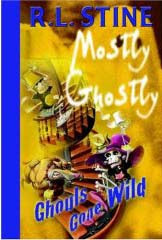
Ghouls Gone Wild? This made me laugh out loud at the library. This is officially my favourite title for a kids' book. In a very unprofessional kind of way. As this recent installation in the Mostly Ghostly series for young kids by massively popular (and prolific) author R.L. Stine made its way through the publishing process, I can't help wondering whether everyone along the way understood the porn reference. And if so, how did that conversation go? Do kids not watch late-night TV too?

A quick google search will show that Stine wasn't the first one to think up this pun, so don't get confused and start telling kids there's a movie version of this book coming out this year....

Another CM review


My review of The Royal Woods by Matt Duggan is up on CM: Canadian Review of Materials. I liked some of the messages in this story (and the explicitly Canadian setting) but wasn't wild about the book overall. Find out why...

March 29, 2007

Indigo's Star


McKay, Hilary. Indigo's Star. London, Hodder Children's Books, 2003.

McKay, Hilary. Permanent Rose. London, Hodder Children's Books, 2005.

An absent father, school bullying, shoplifting, physical disabilities, a mother who keeps keeps forgetting to shop for food and often sleeps in the garden shed, shocking news about an unknown father, a hospitalized younger sister - the makings of a serious, moving, gritty novel for children? Not at all. In this series about the inimitable Casson family, humour is the name of the game. The writing is clever, fun, and endlessly entertaining, but the topics are not always lightweight. This series of books has a particularily British sensibility, where nothing is sacred when it comes to material for humour. Even though these aren't overly controversial books, this sense of irreverence is part of the appeal.

The Casson family is quirky. The children are all named after paint colours - Permanent Rose, Indigo, Caddy (Cadmium Yellow), and Saffron. Bill Casson, their artist father, has left to live in a quiet and immaculate flat in London. Their mother, Eve Casson, isn't very domestically-inclined and spends most of her time in the garden shed painting commisioned pictures of dead pets. Saffron suntans naked behind a wall of hamsters in the back yard and beats up bullies for her younger brother Indigo. Eight year old Rose draws giant pictures on the kitchen wall and sends desperate letters to her father hoping for a crisis big enough to bring him home. Caddy has moved out but brings home a string of hopeless temporary boyfriends in an effort to decide if her real love Michael really is as perfect as everyone thinks.

The Casson family is eccentric, but not hard to identify with. Each book focuses on the story of one central character, but the ongoing storylines of the other siblings continue in the background providing continuity between the books and appeal for a wide range of ages. In Indigo's Star, for instance, twelve year-old Indigo's daily terror at the hands of school bullies is about to change forever when Tom arrives from America with his red bouncing ball and utter disregard for authority. But this central storyline is woven in, at a hectic pace, with the continuing dramas of all other members of the eccentric family.

I am not generally a fan of humorous novels (for children or adults) as I often find them a little too light-weight for my taste, but there was something about the tone of this book that I found very appealing. I enjoyed that nothing seemed out of the reaches of humour, but that real content was not sacrificed for the sake of a quick laugh. I can't help wondering whether a book like this would have come out of North America.

March 28, 2007

Dear Canada: Brothers Far From Home

I decided it was finally time for me to bite the bullet and read one of the Dear Canada books that are so popular with a particular set of girls these days. I can tell you I wasn't looking forward to it. Not only did the intensity of the series marketing make me a little ill, but the form itself (diary entries with lots of "dear reader" direct addresses) isn't, and never was, a favourite of mine. But Jean Little is no small potatoes in Canadian children's lit and I was interested to see what all the fuss was about. I must admit that I didn't have a conversion experience after which I suddenly enjoy the diary-novel, but I was impressed by what Jean Little was able to accomplish within the form. It took about a third of the book for me to stop being distracted by the format, but after that I found myself drawn into the story and eagerly waiting to see how the events of Eliza's life would unfold.

Little, Jean.
Brothers Far From Home: The World War I Diary of Eliza Bates, Uxbridge Ontario, 1916. Markham, ON: Scholastic Canada, 2003.

The year is 1916 and the Great War is the first thing on most people's minds in Uxbridge, Ontario. When twelve-year old Eliza Bates starts writing in her new Christmas diary, her biggest concern is her infuriating older sister Verity. Before she fills the final pages on Christmas day exactly two years later, Eliza will have documented the everyday trials of a family in war-time, sibling bonds and grievances, the unthinkable losses of a family with two sons away at war, and the life-affirming surprises that weave their way into even the most difficult times.

Following the template that has garnered such commercial success for the Dear Canada series, this book is told in first person diary entries, follows the life of a young Canadian girl as it is affected by events on the world stage, and is presented in a hard-cover diary-like form complete with matching ribbon bookmark. But part of the success of the series has also been Scholastic's choice of authors from among the very best of Canadian children's writers, and Jean Little is no exception.

Other than extensive research, Little's strength here is her use of character to ground the larger drama in the life of a single girl. The story's immersion in the events and flavour of the historical period is complete and convincing, but the focus is on their relevance to one family and to a single child trying to find her way through a difficult time. Eliza's character and the drama within her own family circle act as effective entry points to larger world events. The tangible and believable changes in Eliza's character over the two years also give the story a satisfying narrative arc and move the story beyond a simple tool of historical curiosity to a real coming-of-age story.

The language is noticeably more formal than a contemporary diary voice, and the diction is constant reminder of the era. The narrative makes several passing mentions of other historical events that die-hard Dear Canada fans will enjoy tracing back to other books in the series, such as the Halifax harbour explosion (No Safe Harbour: The Halifax Explosion Diary of Charlotte Blackburn, Halifax, Nova Scotia, 1917). The book also includes end-notes with more in-depth historical background and photos from the time of the First World War.

For fans of the series, or those who love to read in the diary format, this book is sure to be an instant hit. But even for those who are less convinced about the series and format, this book is well-written enough that it just may surprise some readers if they can get beyond the distraction of the form.

March 27, 2007

The Crazy Man


Porter, Pamela. The Crazy Man. Toronto: House of Anansi Press, 2005.

Farming in southern Saskatchewan has never been easy, but things go from bad to worse when a gruesome farming accident leaves twelve-year old Emaline Bitterman with a permanently injured leg, a dead dog, and a father who isn’t coming home. Unable to seed this year’s crop on her own, Emaline’s mother makes arrangements a man from the local mental institution to come help in the fields. The neighbours and townspeople are afraid of Angus, but Emaline sees another person struggling to recover from loss and family betrayal.

Unabashedly set in small-town Saskatchewan, the book offers a rich portrait of a farming community struggling to survive a period of dry weather and low wheat prices in the 1960s. The book is also steeped in the larger social and political landscape of the era, with references to Tommy Douglas, Marin Luther, King, the Wheat Board, and the Soviets.

The story doesn’t provide a happily-ever-after on the outside; instead, the narrative arc follows Emaline’s personal struggle to come to terms with her losses. Though the events of the story are difficult, the story itself is not depressing. The tone is hopeful, and the story celebrates the human ability to heal from hurt. Emaline embodies that innocent lack of prejudice often bestowed on child protagonists, but Porter manages to make this interaction convincing and utterly believable.

When someone introduced this book using the phrases “novel in verse” and “appeal for reluctant readers” in the same sentence, I have to say that I was entirely unconvinced. Once I started reading, however, I finished the story in a single sitting. It was compelling, moving and surprising easy to read. The free verse form is used here as a tool to sharpen and condense the language, heighten the emotion and point-of-view of the protagonist, and weed out any extraneous detail or description. The language isn’t “flowery” as some poetry-avoiders might fear, but whittled down to the essentials. Plot, voice, character (and even a sense of place) shine through with an immediacy that makes the book highly readable, while the short lines and 2-3 page sections make the text easier to scan.

Even though the cover is beautiful and the pages nicely designed, this book might be a hard sell to less committed readers, especially with any mention of poetry. A “novel in free verse” sounds unfortunately close to something good for your health. This is unfortunate since The Crazy Man is one of the most compelling and readable books of realistic historical fiction I’ve read. If it hadn’t already won the Governor General’s, the TD Book Award and the Geoffrey Bilson Award for Historical Fiction, I would predict a sweep of prestigious awards for this book.