Showing posts with label LIBR521-week 2. Show all posts

January 21, 2007

The Pleasures of Children's Literature


* Nodelman, Perry. "Picture Books." In The Pleasures of Children's Literature. New York: Longman Publishers USA, 1996.


This chapter begins by challenging the often unexamined premise that picture books exist because children need or prefer pictures. Nodelman notes that making sense of pictures is not an automatic function of seeing them, and actually requires its own (culturally specific) learning process. He also points out that research shows infants prefer the sound of a parent's voice to a visual image, which also makes those assumptions problematic. I like that he concludes this particular discussion by switching the focus from figuring out why picture books exist as a form (or the "correct" form for young children), to understanding that form in all its complex variations and possibilities: "... more important, some of the most pleasurable experiences offered by children's literature are in picture books. If children may be said to like and need picture books, I believe it's mainly because they need and ought to have the many pleasure these books can provide." His approach leaves a little room for mystery and the shining love of story and literature that so often gets ignored in discussions (and oh so necessary grant proposals!) of how picture books can help support literacy, early literacy and other "skills" or "competencies."


The chapter goes on to describe the ways in which pictures provide information needed to make sense of stories, and shows (with illustrated examples) how stylistic choices create different overall effects in mood, suspense, meaning, narrative, or focus. Nodelman offers precise language with which to critically examine picture books and to appreciate the many complex layers of relationship between the text and illustrations.


Thank god someone assigned this reading - I'm so glad to have found it and a little sheepish about not having read it before as I think it's one of the classics. I look forward to the rest of the book. [Note: Cover is for newer edition. I assume it's still great.]

January 20, 2007

The Dragon New Year: A Chinese Legend


Bouchard, David. The Dragon New Year: A Chinese Legend. Illus. Shong-Yang Huang. Vancouver, BC: Raincoast Books, 1999.


This story is tells the tale of the imagined origin of the traditional Chinese New Year celebration, but also provides a section at the end that clearly shows where the facts end and the author's imagination begins. There is a strong sense of storytelling in the narrative which means that even though the story is long, it remains compelling. The paintings stay true to the story in the text, providing stunning visuals that range from more realistic depictions in the present-time narrative bookmarks at the opening and closing of the story (see the cover image), to more a impressionist-like expressiveness and energy in the re-telling of the old tale. On their own, however, the pictures do not tell a story - they show individual scenes but there is not logical narrative that comes out of the sequence of these images. The illustrations are beautiful and masterful on their own, and even though they function more like a slide show to accompany a storytelling event, this is an undeniably gorgeous book.

Ancient Thunder

Yerxa, Leo. Ancient Thunder. Toronto, ON: House of Anansi Press, 2006.

The text is simple, short, potent and full of wonder. The fact that it doesn't follow the linear structure of a traditional English sentence, choosing instead to string together a series of related clauses with an unmentioned subject, puts it more in the realm of poetry than narrative. But the illustrations are the true focus of this book: using paint on watercolour paper, Leo Yerxa (an artist of Ojibway ancestry) recreates the look of traditional painted leather clothing of the native people of the Great Plains. The story is told through the designs on the back of the shirts and dresses, with other collaged or paper-crafted elements added in the background.

That being said, the text does not pale in the shadow of the illustrations but works with it. Not only does the lyrical language suit the mood of the images, it also creates a dependency between illustration and text since the visual cues are needed to understand the text which never once names the horses as the main focus of what is essential a song of praise for these creatures and their prairie landscape. A visually stunning and extraordinary book that celebrates horses and their place in lives of the native people of the Great Plains.

Monkey Business


Edwards, Wallace. Monkey Business. Toronto, ON: Kids Can Press, 2004.

This book reminds me of The King Who Rained, a book of visual/linguistic puns which was a family favourite when I was growing up. Though not structurally a narrative, this book manages to make little self-contained animal-focused stories out of figures of speech ("monkey business" or "letting the cat out of the bag") through detailed and sophisticated watercolour, gouache and pencil crayon illustrations. Not only do the the illustrations transform common idioms into literal pictures, they also add additional visual puns in relation to the original text which add to the layers of linguistic and visual complexity in what might appear (considering the breifness of the text) to be quite a simple book. The illustrations are so complex that when I arrived at the last page that asked if I had found the monkey on every page, I hadn't noticed even one after the original "monkey business" spread. And they weren't easy to find even when I was looking.

Great not only for reading aloud to younger children for the delight of the illustrations, it could be a great tool for discussing idiomatic language with older students or those learning English as a second (or additional) language.

The Party

Reid, Barbara. The Party. Toronto, ON: Scholastic Canada, 1997.

This book is an energetic recounting of a typical family picnic and party. The rhyming text is fun and uses rich language, but it sometimes feels forced or stumbles into awkward cadence; there is no question that the real star of this book is the illustration in plasticine. Not only are the technique, detail and execution of the three-dimensional work extraordinay in and of themselves, but the illustrations are fantastically expressive. Their portrayal of character, whether it be the looming kiss from Aunt Joan or the cake-smeared faces of kids hiding under the picnic table, takes the medium beyond simple novelty to art form. The changing cast of the afternoon and evening light creates and uncanny sense of the passing of the day - the tones slowly deepen and the candles and string of porch lights cast a yellow glow on the surfaces around them. The illustrations also extend and explain the text so that a raid on the dragon's treasure in the text becomes a plan to steal a bowl of chips out from under a sleeping uncle. Even the photography adds to the story with its versatility - in one spread it creates a blurred-motion image of dizzy children while in another the image is crisp enough to see the finger-prints of the artist.

The Great Poochini

* Clement, Gary. The Great Poochini. Vancouver, BC: Douglas & McIntyre, 1999. *

"As you can plainly see, Signor Poochini is no ordinary dog. He is handsome, housebroken and hounded by throngs of adoring fans. He is, in fact, the Great Poochini, the most renowned opera-singing dog of his generation and, some say, the finest canine lyric tenor ever to have graced the opera stage."

What will is an opera-singing dog to do when he is trapped in his unsuspecting owner's house and can't make it to the premiere of his latest show? This enchanting story, complete with cat burglar and a rousing duet with Madama Barkoli, takes pleasure in creating humour through the small details of both the text and the sophisticated caroon-like paintings. The narritive is brimming with of pun and wit, but the complexity of both the humor and the language (including some opera-inspired sprinklings of Italian which are translated below) make this a book for school age children. The text and illustrations work together to create a character that is as unforgettable as he is extraordinary. The Great Poochini is truly great.

The Queen's Feet

* Ellis, Sarah. The Queen's Feet. Illus. Dusan Petricic. Calgary, AB: Red Deer Press, 2006.

Queen Daisy's feet has a life of their own, and they don't much like to behave. After getting into all sorts on un-ladylike trouble, the queen's feet finally make a deal. This lively story is extended my the watercolour and pen-and-ink illustrations which offer additional details of misbehaviour and provide a foot-centric view of the world (aside from the cover and title page, the above-the-knees queen doesn't appear until almost the end of the story when the two parts come to an understanding). The illustrations also reinforce the idea of the feet as a character in their own right, independant of the queen. The story explores the tension between the pressure to follow rules and the need to feel free and wild, and provides a model for coming to terms with parts of ourselves that want to act in different ways.

Amber Waiting

* Gregory, Nan. Amber Waiting. Illus. Kady MacDonald Denton. Calgary, AB: Red Deer Press, 2002.
Amber loves many things about kindergarten - swinging, painting, listening to stories. What she doesn't like is waiting, long after everyone else has left, for her dad to pick her up. She imagines a scenario that will teach her dad, once and for all, just what it feels like to wait and wait and wonder if someone's forgotten you. Nan Gregory's strong sense of voice and character brings the text to life right from the opening line, making it easy to identify with the narrator. The stylized cartoon-like paintings are expressive but also straightforaward enough to be consistant with the appeal of recognizability of a day-in-the-life kindergarten story. The illustrations also help delineate the imagination-based storyline from the real, with figures in the imaginative sequences cut-out and collaged on a painted background, giving them a floating, slightly ethereal aesthetic which mimics the ability of the mind to imagine the everyday figure of life in new situations. There is a wonderful balance between the text and illustrations, both of which bring a strong sense of individuality and spunkiness to the story.

Orphans in the Sky

Bushey, Jeanne. Orphans in the Sky. Illus. Vladyana Krykorka. Calgary, AB: Red Deer Press, 2005.

This story tells the tale of two orphans who must figure out a way to survive in the harsh artic landscape after they are accidentally left behind by their people. They finally find a place to belong in the sky, where their games with flint and seal skin explain the origins of lightening and thunder. Rather than expanding the narrative, the tempera paintings locate the text and provide an indelible sense of place: It is through these illustrations that the northern landscape is transformed from a background setting into a central character and driving force of the story. Horizontal brushstrokes overlaid on almost every image give a sense of wind, weather and the real threat implicit in this beautiful but unforgiving northern landscape. Simple black-and-white scratchboard images run across the pages of text in a horizontal band, with a much more playful and decorative effect that helps balance the strong colour pages with the white space of the facing page. A beautiful story that touches on survival, belonging, fear, the landscape of the north, inuit culture and language, and the stories that inhabit natural phenomenon.

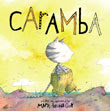
Caramba


* Gay, Marie-Louise. Caramba. Toronto: House of Anansi Press, 2005.

"Caramba look like any other cat. He had soft fur and a long , stripy tail. He ate fish. He purred. He went for long walks. But Caramba was different from other cats. He couldn't fly." So begins the quest of a endearing young cat who tries desperately to be like the others, but learns along the way to enjoy being who he is and discovers a talent that surprises even himself. The watercolour paintings with pencil and pastel provide a straight-ahead illustration of the storyline, but add a strong sense of exuberance and humour while further developing character. A beautiful, funny, touching book.

January 14, 2007

Taming Horrible Harry


Chartrand, Lily. Taming Horrible Harry. Illus. Roge. Trans Susan Ouriou. Toronto, ON: Tundra Books, 2005.

The stunning image and design of the cover were enough to make me pull this book off the shelf. But, though gorgeously illustrated, Taming Horrible Harry was a somewhat disappointing read. Harry the horrible monster loves nothing more than to hide in the woods and scare people. But when a girl is too wrapped up in her book to be scared of Harry's first scream, he becomes fascinated with the book and learns to read. The story eventually culminates in a positive and remarkably boring ending, but the direction is clear from the fourth or fifth spread. Not only was the text long and surprisingly didactic, the story itself fell flat since there was very little tension, humour or actual plot past these first few pages.

The brightly coloured paintings seem to carry the entire weight of creating character, action and interest. Based on these illustrations, it is hard not to develop a fondness for the little round red monster in the green plaid pants. But for all their energy and visual appeal, these illustrations do little to extend the narrative itself in a meaningful way. For a story that begins with "Horrible Harry was a big, dirty, mean monster," and ends with a monster who spends his days reading peacefully in the forest and hoping to one day find the little girl whose book inspired him, the illustrations show little variation in mood, tone or colour pallette. The transformation which takes place in the text, unconvincing as it is, is almost entirely absent from the illustrations, with the exception of facial expressions.

This is a beautiful book with a great message, but the narrative - both in the text and illustrations - quickly lost my interest.

Translated from the French original.

January 13, 2007

Writing Your Best Picture Book Ever

Stinson, Kathy. Writing Your Best Picture Book Ever. Illus. Alan and Lea Daniel. Markham, ON: Pembroke Publishers Limited, 1994.

This fun illustrated how-to book is aimed at children, but is also an excellent resource for teachers planning a story-writing unit or adults interested in writing/evaluating picture books. It covers all the basic aspects of picture books like plot, character, title, pacing, tension, page breaks, and so on, while providing excellent examples of each in published picture books (mostly from the 80s and 90s). The advice is very clear and concrete with many examples, the language is accessible, and the tone is supportive and humorous. This book is full of advice that anyone interested in picture books can learn from: "Worrying about things like spelling, punctuation, vocabulary, and whether something is too silly or too sad as you work on your first draft will only get in the way of the free-wheeling, creative part of your brain."